


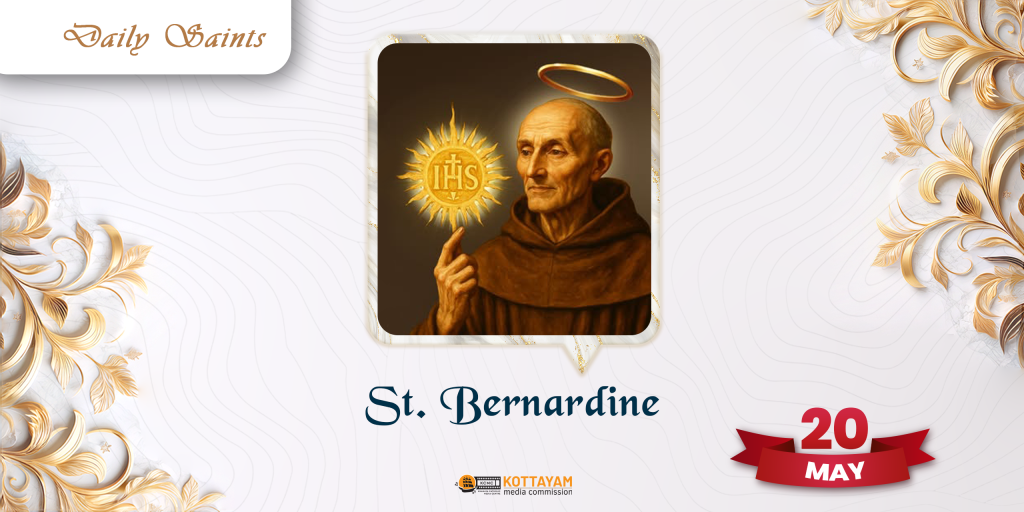
1380-ല് ഇറ്റലിയിലെ കരാരയിലാണ് വിശുദ്ധ ബെര്ണാഡിന് ജനിച്ചത്. അദ്ദേഹത്തിന്റെ ബാല്യത്തില് തന്നെ നഗരം പകര്ച്ചവ്യാധിയുടെ പിടിയിലായ അവസരത്തില് വിശുദ്ധന് നിരവധി രോഗബാധിതരെ ശുശ്രൂഷിക്കുകയുണ്ടായി. തുടര്ന്നു കഠിനമായ രോഗബാധിതനായതിനെ തുടര്ന്ന് വിശുദ്ധന് സന്യാസജീവിതം നയിക്കുവാന് തീരുമാനിക്കുകയും, അതിനായി ഒരു ഫ്രാന്സിസ്കന് ആശ്രമത്തില് ചേര്ന്നുകൊണ്ട് ഫ്രാന്സിസ്കന് സന്യാസിയായി തീരുകയും ചെയ്തു. ബെര്ണാഡിന്റെ ആശ്രമത്തിലെ മേലധികാരികള് അദ്ദേഹത്തിന് സുവിശേഷം പ്രഘോഷിക്കുക എന്ന ദൗത്യമാണ് നല്കിയത്. കഠിനമായ തൊണ്ടരോഗത്താല് പീഡിതനായിരുന്നുവെങ്കിലും വിശുദ്ധന് തന്റെ ദൗത്യം സന്തോഷപൂര്വ്വം സ്വീകരിക്കുകയും ദൈവനാമത്തെ മഹത്വപ്പെടുത്തുകയും ചെയ്തു. ചുരുങ്ങിയ ദിവസങ്ങള്ക്കുളില് വിശുദ്ധന്റെ രോഗം അത്ഭുതകരമായി സുഖപ്പെട്ടു.
പിയൂസ് രണ്ടാമന് വിശുദ്ധനെ ഒരു ‘രണ്ടാമത്തെ പൗലോസ്’ എന്നായിരിന്നു വിശേഷിപ്പിച്ചിരിന്നത്. കാരണം വിശുദ്ധ ബെര്ണാഡിന്, ശക്തനും ശ്രേഷ്ടനുമായിരുന്ന സുവിശേഷകനായിരുന്നു. വളരെയധികം ഊര്ജ്ജ്വസ്വലനായിരുന്ന വിശുദ്ധന് ആവേശപൂര്വ്വം ഇറ്റലിയുടെ തലങ്ങും വിലങ്ങും സഞ്ചരിച്ച് സുവിശേഷ പ്രഘോഷണം നടത്തുകയും, ജനങ്ങളുടെ ഉള്ളില് യേശുവിന്റെ നാമത്തോട് സ്നേഹവും, ബഹുമാനവും ഉളവാക്കുകയും ചെയ്തു. സഭക്കുള്ളില് തന്നെ അനിവാര്യമായൊരു നവോത്ഥാനത്തിന്റെ ഉദ്ഘാടനം കുറിക്കുവാന് തക്കവിധം വിശുദ്ധന് അസാധാരണമായ സ്വാധീനം ഉണ്ടായിരുന്നു.
വിശുദ്ധന് അനേകം അനുയായികള് ഉണ്ടായിരുന്നു. വിശുദ്ധ ജോണ് കാപിസ്ട്രാനെ പോലെയുള്ള ശ്രേഷ്ഠരായവര് ഉള്പ്പെടെയുള്ള നിരവധിഅതില് ഉള്പ്പെട്ടിരിന്നു. സാധാരണയായി വിശുദ്ധന് ഒരു നഗരത്തില് പ്രവേശിക്കുമ്പോള് തനിക്ക് മുന്നിലായി ഒരു പതാകയും വഹിക്കുന്ന പതിവുണ്ടായിരുന്നു. ഈ പതാകയുടെ മുകളിലായി കുരിശോടുകൂടിയ യേശുവിന്റെ ദിവ്യനാമം (IHS) പന്ത്രണ്ട് സുവര്ണ്ണ രശ്മികള് കൊണ്ടുള്ള ഒരു വൃത്തത്തിനകത്ത് രേഖപ്പെടുത്തിയിരിന്നു.
വിശുദ്ധന് സുവിശേഷം പ്രഘോഷിക്കുമ്പോഴെല്ലാം ഈ അടയാളം പ്രസംഗവേദിക്കരികില് വെക്കുകയോ, മുഴുവന് ശ്രോതാക്കള്ക്കും കാണത്തക്കവിധം വലിപ്പമുള്ള ദൈവീക അക്ഷരമുദ്ര പതിപ്പിച്ച ഒരു ഫലകം തന്റെ കയ്യില് പിടിക്കുകയോ ചെയ്തിരിക്കും. വിശുദ്ധ ബെര്ണാദിന്റെ തീക്ഷ്ണമായ അഭ്യര്ത്ഥന മുഖാന്തിരമാണ് അനേകം പുരോഹിതന്മാര് തങ്ങളുടെ ദേവാലയത്തിന്റെ അള്ത്താരയിലും, ഭിത്തികളിലും യേശുവിന്റെ നാമം പതിപ്പിക്കുന്ന പതിവും, വചനങ്ങള് രേഖപ്പെടുത്തിയ ചെറിയ കാര്ഡുകള് ജനങ്ങള്ക്കിടയില് വിതരണം ചെയ്യുന്ന പതിവും തുടങ്ങിയത്. ഒപ്പം വിശുദ്ധ ബെര്ണാഡിന്റെ പ്രേരണയാലാണ് ഇറ്റലിയിലെ നിരവധി നഗരങ്ങളിലുള്ള പൊതു കെട്ടിടങ്ങളില് സിയനായില് നിന്നുപോലും കാണത്തക്കവിധം വലിപ്പത്തിലുള്ള മുദ്രാക്ഷരങ്ങള് കൊത്തിവെക്കുന്ന പതിവും ആരംഭിച്ചത്.
Saint Bernardine was born in 1380 in Carrara, Italy. During his childhood, when the city was afflicted by a plague, the saint tended to and served many of the infected. Later, after suffering a severe illness himself, he decided to embrace monastic life and joined a Franciscan monastery, becoming a Franciscan monk. The superiors at Bernardine’s monastery entrusted him with the mission of preaching the Gospel. Although he was afflicted with a severe throat disease, the saint joyfully accepted his mission and glorified the name of God. Miraculously, within a short period, his illness was cured.
Pope Pius II referred to the saint as a “second Paul,” as Saint Bernardine was a powerful and eminent preacher of the Gospel. Filled with great energy, the saint passionately traveled across Italy proclaiming the Gospel, inspiring love and reverence for the name of Jesus in the hearts of the people. He had an extraordinary influence, enough to mark the beginning of an essential renewal within the Church.
The saint had numerous followers, including prominent individuals such as Saint John of Capistrano. It was customary for the saint to carry a banner ahead of him when entering a city. At the top of this banner was the divine name of Jesus (IHS) inscribed within a circle of twelve golden rays, along with a cross.
Whenever the saint preached the Gospel, this symbol would be placed near the pulpit or he would hold a plaque inscribed with the divine letters large enough for the entire audience to see. Through the fervent appeal of Saint Bernardine, many priests began the tradition of engraving the name of Jesus on the altars and walls of their churches and distributing small cards with these words to the faithful. Inspired by Saint Bernardine, the practice of inscribing these divine letters on public buildings in many Italian cities, visible even from Siena, also began.